

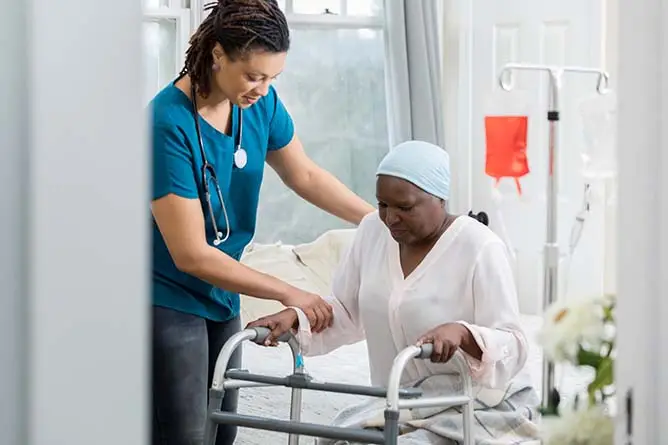
While many registered nurses (RNs) work in hospitals, others find rewarding careers in a wide range of exciting work environments. Approximately 39% of RNs with an associate degree in nursing (ADN) or a bachelor of science in nursing (BSN) work outside of hospitals.
To determine the ten best places to work as a nurse, we considered average salary, accessibility, employment projections, and overall workload. If you’re considering a nursing career or changing jobs, keep reading to learn about some of the places where nurses can make a difference in the lives of patients.
1. Hospitals
Approximately 61% of RNs work in state, private, or community hospitals. RNs who work in hospitals frequently perform a variety of tasks and care for a variety of patients on a daily basis.
Nurses typically work 12- to 15-hour shifts in hospitals. They do, however, have more days off than those who work regular 9-5 schedules.
Salary: $76,840
Key Responsibilities:
- Collaborate on patient care with doctors and other nurses
- Care for multiple patients during the day
- Take blood samples and perform labs
2. Telehealth
As telecommunication becomes increasingly incorporated into the healthcare industry, some nursing jobs have gone completely remote. Telehealth nurses perform remote patient consultations, freelance writing for medical journals, legal counsel, and research.
While remote jobs let nurses work from home, RNs must be skilled at time management and motivated to work independently.
Salary: $64,220
Key Responsibilities:
- Schedule telehealth visits and meetings with patients and clients
- Use video technology to assess and treat patients
- Develop and adhere to a consistent work schedule
3. Emergency Rooms
Emergency rooms (ERs) provide patients with urgent care. ER nurses work with doctors and other nurses to stabilize critically ill or injured patients. These RNs need strong critical thinking skills to handle complicated situations.
Salary: $69,080
Key Responsibilities:
- Maintain a calm demeanor in high-stress situations
- Administer medications and treat injuries
- Stabilize patients in critical condition
4. Physicians’ Offices
RNs who work in doctors’ offices often enjoy a more structured workday than other nurses. Their patients must make an appointment to be seen and generally do not have life-threatening conditions. These nurses assist the physician, take patients’ vital signs and information, and schedule appointments.
Salary: $57,940
Key Responsibilities:
- Gather lab samples
- Schedule appointments
- Help physician treat patients
5. Secondary Schools
Like RNs, nurse educators are in high demand. Nurse educators teach classes in nursing colleges and training hospitals. Most are expected to hold a master’s degree, and some institutions require instructors to hold a doctorate.
Salary: $77,300
Key Responsibilities:
- Develop lessons and plan lectures
- Establish a curriculum
- Share their extensive knowledge of the nursing profession
6. Birthing Centers
Nurse midwives help patients at every stage of pregnancy. Working alongside gynecologists and obstetricians, they support pregnant women and their unborn children during the birthing process.
Nurse midwives need an RN license, a graduate degree with a concentration in nurse midwifery, and certification from the American Midwifery Certification Board.
Salary: $97,787
Key Responsibilities:
- Collaborate with other medical professionals to care for pregnant women
- Collect and assess patients’ health information
- Educate patients on healthy practices before, during, and after pregnancy
7. Public Health Clinics
The public health nurse role is ideal for RNs who want to serve and improve their community. Social services agencies and community centers hire public health nurses to teach citizens about local and national health crises. These nurses also create and implement programs to promote healthy practices and prevent illness.
Typically, public health nurses need to hold a master of science in nursing or a doctoral degree. Some nursing programs offer accelerated programs that let prospective public health nurses earn an undergraduate and graduate degree simultaneously.
Salary: $59,560
Key Responsibilities:
- Provide communities with health-related services and education
- Develop and implement programs to improve health locally
- Work in tandem with citizens to address diseases or illnesses affecting the community
8. Correctional Facilities
Nurses who work in correctional facilities treat inmates with chronic illnesses and medical emergencies. These nurses must be physically and mentally equipped to handle a variety of challenging and stressful situations.
Most correctional facilities maintain a 24-hour nursing staff, and nurses may work more than 40 hours a week. A correctional nurse’s daily routine may involve collecting samples from patients, administering medications for chronically ill inmates, and treating injured or sick inmates.
Salary: $54,000
Key Responsibilities:
- Perform drug screenings and lab tests
- Monitor inmates’ health
- Assess and treat health conditions and injuries
9. Law Firms
RNs who work in law offices use their professional expertise to assist with malpractice suits or legal cases involving healthcare. They help lawyers construct cases, review medical records, and research medical law.
Employers at law offices typically prefer to hire RNs with some relevant experience and paralegal training. The American Association of Legal Nurse Consultants certifies RNs before they can give legal counsel.
Salary: $78,070
Key Responsibilities:
- Prepare documents and records for court
- Offer medical expertise during legal proceedings
- Provide informed testimony in court
10. Home Healthcare
Home healthcare nurses improve or maintain patients’ health within the client’s own home. Some work lengthy hours, stationed close to the patient for extended periods of time. These nurses make up a large portion of RNs, with around 12% providing in-home healthcare services.
This role typically involves long hours working with the client. RNs can boost their employment prospects by earning certifications from organizations like the American Nurses Credentialing Center (ANCC).
Salary: $67,020
Key Responsibilities:
- Check patients’ vital signs and general condition
- Administer medications
- Provide patients with assistance and companionship
FAQs:
What jobs can RNs do?
RNs can find a wide range of rewarding job opportunities in the healthcare industry. Those looking for work in a fast-paced environment where they can save lives, for example, can become ER nurses. Others, such as nurse midwives or correctional nurses, specialize in treating specific populations.
Where can RNs work besides hospitals?
There are numerous opportunities for registered nurses outside of traditional healthcare settings. Nurses who do not want to work in a high-stress environment may be interested in telehealth positions, as well as positions with insurance companies or law firms. Legal firms and publications require veteran nurses’ knowledge of the healthcare industry. In-home care is becoming more popular among the elderly, and some nurses excel in positions in prisons, schools, and birthing centers.
Where is the best place to work as an RN?
Each RN has a different ideal workplace, and every healthcare setting has advantages and disadvantages. Some nurses prefer dealing with paperwork and documents in a legal office, whereas others prefer making interpersonal connections. Aspiring nurses must choose the setting that best fits their skills and needs.